
A Q&A about Palimpsest, a poetry collection in collaboration with the State Library of NSW
30 Sep 2026
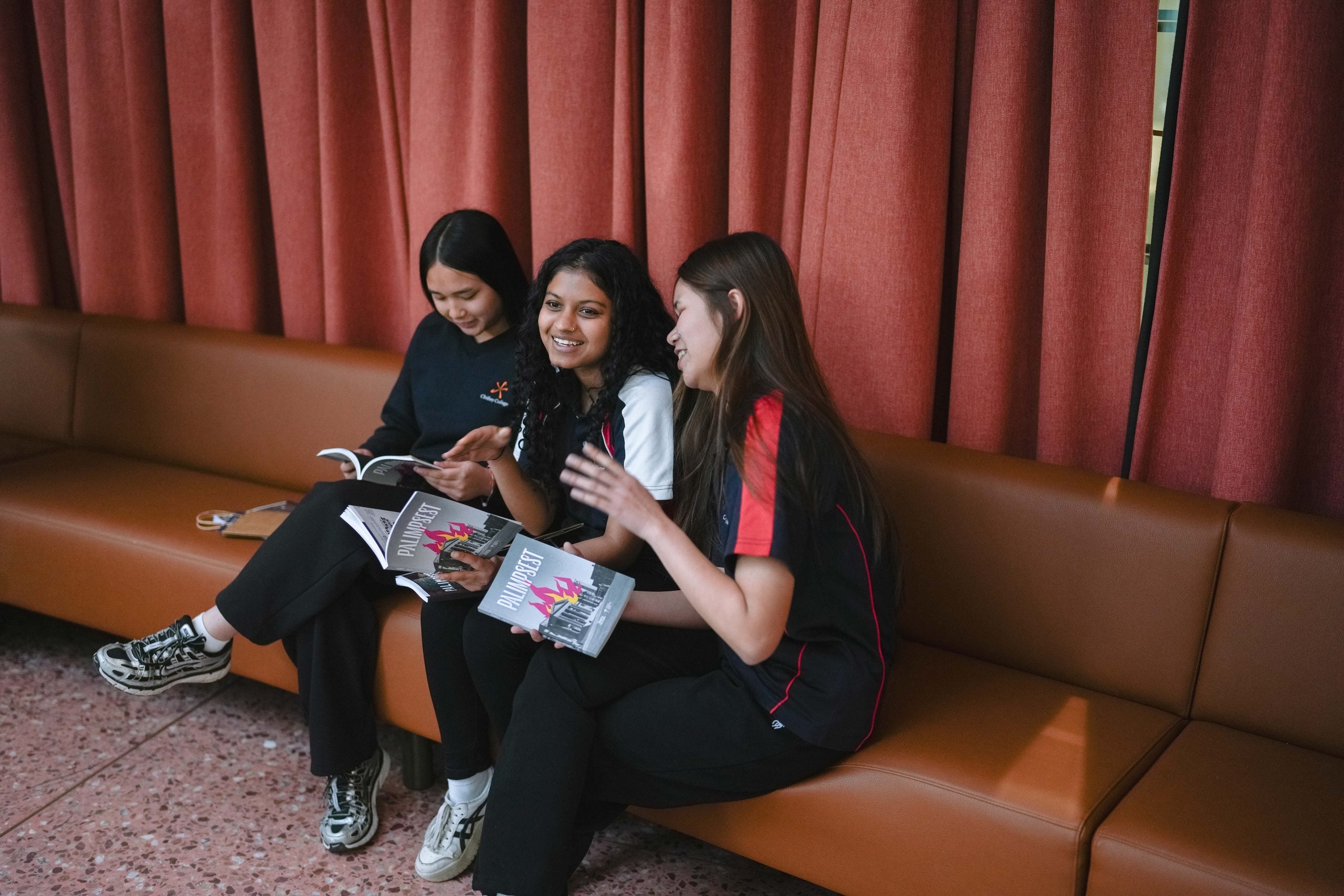
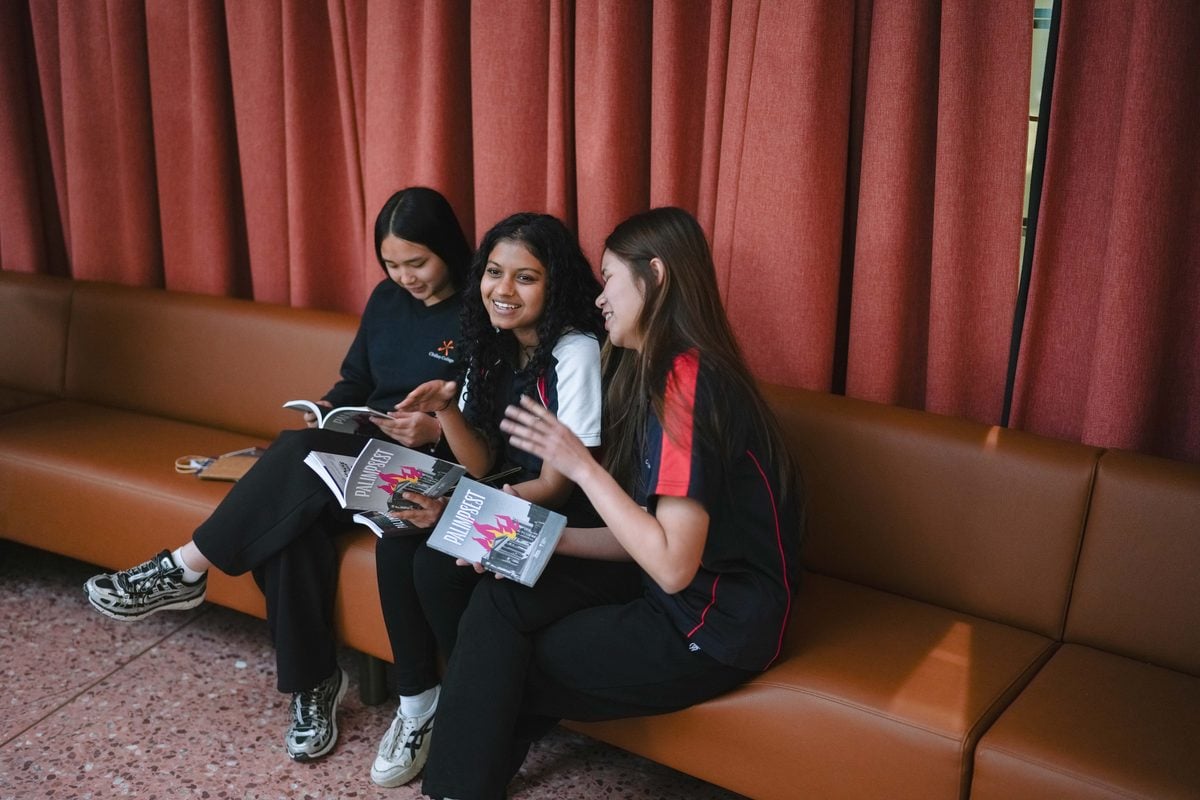
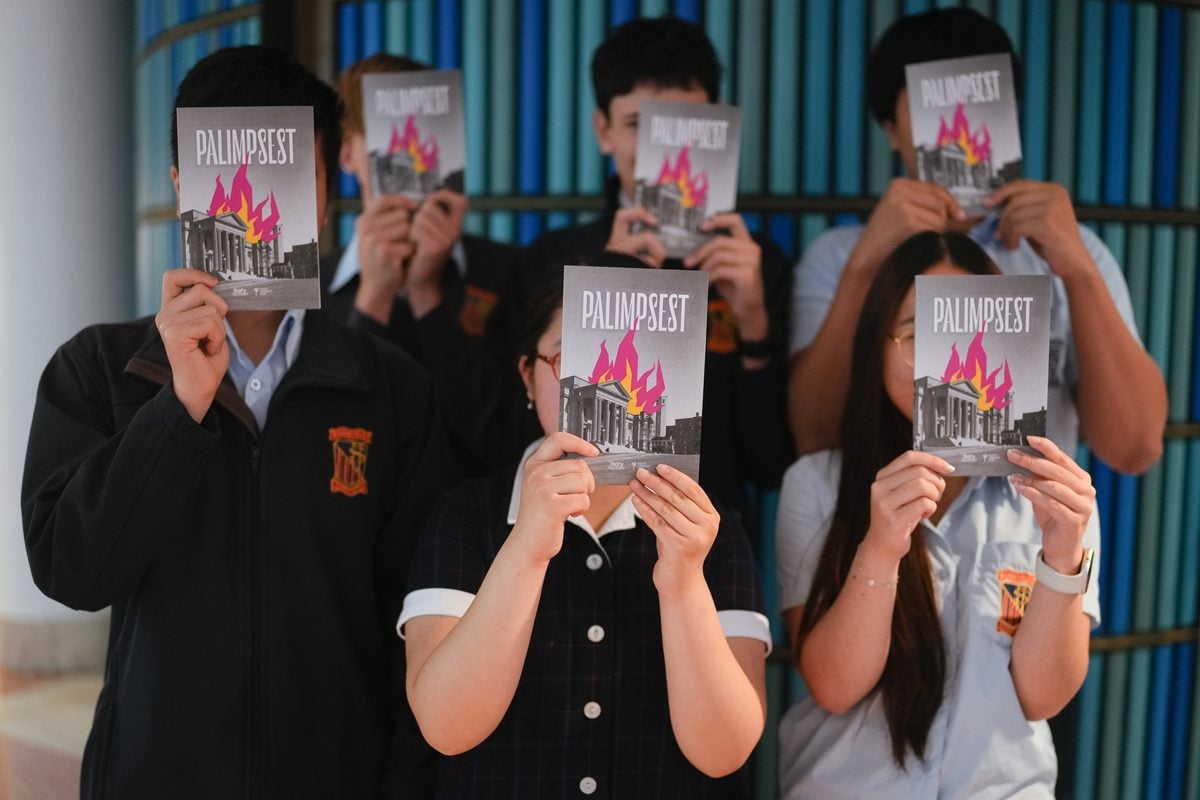
To mark the State Library of NSW’s 200th anniversary, Story Factory partnered with one of Australia’s oldest public institutions to publish Palimpsest. It’s a new collection of poetry by more than 100 students from three high schools in Western Sydney — Bonnyrigg High School, Chifley College Dunheved Campus and Holroyd High School. Inspired by the Library’s collections, these young writers have written themselves into and over the history of the State Library, so that contemporary voices sit alongside the stories, objects and archives of the past.
We sat down with Philip Wilcox, our Special Projects Manager to learn more about the project.
To kick us off Philip, could you explain what a palimpsest is? Many people hearing about the project have told us that they hadn’t heard the word before, or have no idea what it means!
I know, what a ridiculous word! It’s a word that isn’t used very often, but it’s very interesting in that a palimpsest is a manuscript that has been written over, allowing the old and the new to exist together. Originally, it was to preserve the writing material, often the skin of an animal that gets scraped clean of the writing or illustrations over the top. But a palimpsest can actually refer to any document that has been annotated over time. It could be notes jotted down in margins, blackout poetry, or layers of graffiti in a tunnel.
Can you tell us more about the project and how the concept of a palimpsest fits into it?
The State Library isn’t a fixed entity with a set number of books or objects — it’s an ever-evolving, living space with new books, collections and exhibits appearing each year. The idea behind Palimpsest was to introduce young people to the treasures in the State Library’s collection. Just like a palimpsest is written over the top of an existing work, we asked students to come up with their own interpretation of the collection, and apply it to their own lives. We wanted young people to consider the way that a palimpsest can explore the past, celebrate the present, and look to the future that they want to see for themselves.
What makes this a unique program for Story Factory?
This project is exciting because of the access it gave young people to the State Library. We often deliver programs in schools or in one of our centers, but Palimpsest offered young people the chance to visit Sydney’s CBD and the State Library. Going in behind the scenes at the library, seeing its treasures and being asked their interpretation was incredibly validating. Some students had never been into the CBD, let alone the State Library. Now when they see a map of the city, walk through the CBD, or visit the library, they’ll know that a piece of them and their writing lives in the collection.
How did students respond to this realisation?
The students were really excited when they walked into The Mitchell Library and saw people setting up desks to work on Uni assignments and novels. It was a really cool moment to witness them realise that this grand place with tall ladders and stained glass windows is a free space that belongs to them.
Were there any particularly memorable moments during the project?
As part of the project, Bundjalung and Gumbaynggirr poet and educator Dakota Feirer was commissioned to write a poem in response to Mervyn Bishop’s iconic 1975 photograph of Prime Minister Gough Whitlam pouring soil into the hands of Gurindji Elder Vincent Lingiari. Standing next to the photograph, Dakota read a poem that spoke to the photograph, as well as to his experience, modelling vulnerability. Some students were silent — I think they realised “Okay, I’m being asked to bring something of myself, to be brave and vulnerable, but this is a space that’s safe for me to do that because someone like Dakota has already gone there.”
Were there any stand-out moments from the official book launch?
The students went down into the stacks, seven levels underground where a copy of the book will be stored for another 200 years! The Library doesn’t throw anything out, so this document that they made is going to live on for their grandchildren, and maybe even their grandchildren’s grandchildren.
On the topic of legacy, one of the students Xavier almost embodied the idea of a palimpsest. He recognised a plaque in the Objects Gallery of his ancestor Charles Harpur, Australia’s first romantic poet. Xavier was inspired to write his own romantic poetry in the same style, which was a beautiful moment for Xavier to be the person to hand the book over to the State Library for safekeeping.
Was there anything that surprised you during the program?
The breadth of voices and just how many different ways a painting, miniature or photograph can be described. Some of their interpretations were really funny and irreverent, others philosophical and deeply wise, and others quite personal. For instance, you can turn seeing a sword in the Objects Gallery into a short, powerful anti-war poem or something really funny and absurd. The variety doesn’t just come from the breadth of the objects in the collection, it comes from the breadth of students’ experiences. It showed the different ways that the students can’t help but be themselves.
Why should readers purchase their own copy of Palimpsest?
This book shows how young people see themselves, and that’s rare to see in a book. It’s also just also a bit of a love letter to the idea of a library, and to the experience of 200 years of history in New South Wales. These students have been formed by those 200 years of history, and now they get to respond to it and think about what’s next. I think that’s worth reading about.
Purchase your own copy of Palimpsest through our online bookshop.
A selection of poetry from Palimpsest
Wings of Freedom
— Ibrahim, Holroyd High School
I call out to the people,
those without wings,
bitter silence
every time my mouth opens.
I do not want to be
the overprojecting voice,
projecting false ideals.
I grip the mic
and call out once again.
My voice echoes
through the speakers.
People stop and listen.
My mouth reveals an image:
a future, where everyone
has wings of their own.
I want to not be afraid
as I soar on massive wings
through the desert skies.
I want to be the eagle
flying against the wind
but not the one
that goes with the flow.
I call out to the people.
They sprout wings of their own.
The Weight of a Thousand Soldiers
— Anthony, Chifley College Dunheved Campus
It sat to the left of nobody
It knew the smell of power, of honour, of fear
It weighed no more than a small baby
and carried the weight of a thousand soldiers
The Journey Away
— Natasha, Bonnyrigg High School
Echoes of a motor’s hum,
murmurs of the willow’s wind,
chirping of two-winged,
four-winged critters…
…fading.
Washed away by the lapping of water.
The crash of waves,
the sting, taste and scent…
…of sea salt.
I travel with that memory as I
drift away from the country my family
calls their sanctuary,
calls their home.